
You can place a porta-potty in your backyard near Newark, but you’ll need to secure permits from the city’s health department initially. Your unit must sit at least 10-15 feet from property lines and 50 feet from any water sources or wells. You’re also required to obtain approval from the Department of Engineering and maintain documented servicing schedules. If you’re part of an HOA, you’ll need written board approval before installation. The sections below cover placement requirements, common usage scenarios, and compliance procedures in greater detail.
Before placing a porta-potty in your backyard near Newark, you’ll need to understand the local regulations that govern temporary sanitation facilities on residential property. Newark’s health department requires permits for portable toilets, even on private land.
You must maintain minimum setback distances from property lines, typically 10-15 feet, and guarantee the unit sits at least 50 feet from water sources or wells.
Your porta-potty needs regular servicing—usually weekly—to comply with sanitation codes. You’re also responsible for proper waste disposal through licensed contractors.
Zoning ordinances may restrict placement duration, often limiting temporary units to specific timeframes tied to construction projects or special events.
Contact Newark’s Department of Engineering and the Essex County Health Department to verify current requirements before installation.
See also: porta potty rental service in Newark NJ
When you’re installing a porta-potty on private property in Newark, you’ll face considerably different regulatory requirements than public property placements.
Private property installations typically require only homeowner consent and adherence to setback distances from property lines and structures. You won’t need special permits for temporary residential use, though you must maintain sanitary conditions and arrange proper waste disposal.
Public property placements demand municipal permits, liability insurance, and compliance with Americans with Disabilities Act standards. You’ll need approval from Newark’s Department of Engineering and supplementary permits for events on public land.
Public installations also require regular maintenance schedules and adherence to specific placement guidelines.
Understanding these distinctions helps ensure you meet all legal requirements and avoid penalties or removal orders from local authorities.
Now that you understand the regulatory framework for private property installations, you’ll find homeowners and residents request backyard porta-potties for several specific circumstances.
Construction and major renovation projects are the primary use cases, as municipal codes often require sanitation facilities when indoor plumbing is disconnected.
You’ll need portable units during septic system repairs or when your main sewer line requires extensive work.
Large outdoor events such as weddings, graduations, and family reunions may require temporary installations when guest capacity exceeds your home’s bathroom capacity.
Property owners managing extended landscaping projects or pool installations also utilize these units to prevent workers from accessing interior spaces.
Emergency situations, including natural disasters or sudden plumbing failures, represent another legitimate application where backyard porta-potties provide crucial sanitation during restoration periods.
Under Newark’s municipal code, you can legally place a porta-potty in your backyard provided you’ve obtained the necessary permits and meet specific zoning requirements.
You’ll need approval from the Department of Engineering for temporary sanitation facilities, particularly for events or construction projects. Your placement must comply with setback requirements—typically maintaining a minimum distance from property lines and neighboring structures.
You can’t position units near water sources or drainage systems without proper authorization. For residential events, you’re generally limited to specific timeframes, usually not exceeding consecutive days without renewal.
Commercial or construction-related installations require separate permits and may be subject to additional inspections.
We’ll help you navigate Newark’s permitting process to ensure your backyard porta-potty installation complies with all regulatory standards and receives proper authorization.
Home renovation and construction projects trigger mandatory sanitation requirements under Newark’s building codes.
You’ll need portable toilets when your project eliminates access to functional bathroom facilities for workers or occupants. New Jersey construction regulations require one toilet for every 20 workers on active job sites.
Your contractor must position units within 200 feet of the work area. During major renovations that affect plumbing systems, you must provide alternative sanitation facilities before disconnecting existing bathrooms.
Essex County health codes mandate regular servicing—typically weekly for residential projects.
You don’t need special permits for temporary construction toilets, but you must comply with setback requirements from property lines and water sources.
Most renovations lasting more than two weeks require installing porta-potties to maintain code compliance and worker safety standards.
When hosting outdoor events with 50 or more guests, Newark’s municipal code requires you to provide adequate sanitation facilities beyond your home’s existing bathrooms. You’ll need proper permits from the city’s Department of Public Safety at least 72 hours before your event.
| Guest Count | Minimum Units Required | Permit Type |
|---|---|---|
| 50-100 | 2 standard units | Special Event |
| 101-200 | 3 standard units + 1 handwashing station | Special Event |
| 201+ | 1 unit per 75 guests + handwashing stations | Large Gathering |
Your rental must comply with setback requirements: 10 feet from property lines and 15 feet from neighboring structures. We’ll guarantee your portable restrooms meet all Newark regulations while maintaining the professional appearance your event deserves.
Beyond event-specific requirements, Newark’s zoning ordinances dictate when you’ll need formal approval for a portable restroom on your property.
Residential placements typically fall under temporary structure regulations, which vary based on duration and property classification.
Key permit considerations include:
We’ll help you navigate Newark’s specific requirements and coordinate necessary approvals.
Contact your local zoning office or consult with us to ensure your backyard porta-potty placement complies with all regulatory standards before installation.
Newark’s municipal code requires permits for portable restrooms that remain on residential property for more than 14 consecutive days.
You’ll need to submit an application to the Department of Engineering at least five business days before placement. The permit costs $75 and remains valid for 90 days.
You’re also required to obtain a permit when placing units for large gatherings with more than 50 people, regardless of duration.
Special events like weddings or graduation parties fall under this requirement.
Additionally, if your property sits within a historic district or has zoning restrictions, you’ll need approval from the Zoning Board before applying for the standard permit.
You must guarantee the unit maintains a 10-foot setback from property lines and doesn’t obstruct public walkways or driveways.
Before placing a porta-potty in your backyard, you must review your HOA’s covenants, conditions, and restrictions (CC&Rs).
These governing documents often include provisions governing temporary structures and sanitation facilities on residential properties. Non-compliance can result in fines, mandatory removal orders, or legal action against you.
Your HOA may regulate the following aspects:
Contact your HOA board directly to obtain written approval before proceeding with your porta-potty rental.
Once you’ve secured necessary approvals, you must position your porta-potty on level, stable ground that can support approximately 1,000 pounds when the unit is occupied and serviced.
Maintain minimum clearances: place the unit at least 10 feet from property lines, 50 feet from wells or water sources, and away from overhead power lines.
Guarantee unobstructed access for delivery and service vehicles, typically requiring a 10-foot-wide clearance path.
Anchor the unit properly to prevent tipping during high winds.
You’ll need adequate drainage to prevent standing water accumulation around the base.
Keep the porta-potty away from areas where children play and position doors facing away from neighboring properties for privacy.
Install proper lighting if you’ll use the unit after dark to prevent accidents.
Although local ordinances vary, you must typically maintain a minimum distance of 10 feet between your porta-potty and all property boundaries to comply with Newark’s setback requirements.
These regulations protect neighboring properties and guarantee proper access for service vehicles.
When determining placement distances, consider these critical spacing requirements:
You’ll need documentation showing exact measurements from your property survey.
Pristine Portable Solutions can help verify compliant placement locations before installation, preventing costly violations and relocation expenses.
Ground stability directly impacts porta-potty safety and serviceability throughout your rental period.
You’ll need to position your unit on level, compacted ground that won’t shift under its weight—especially when it’s serviced or heavily used. Avoid placing porta-potties over septic systems, drainage fields, or underground utilities, as the weight can cause damage.
Proper drainage is similarly critical. You must ensure the area doesn’t collect standing water, as this creates unsanitary conditions and destabilizes the unit’s base.
If your yard has poor drainage, you’ll need to prepare the site with gravel or placement boards. Keep units away from slopes where runoff occurs.
When you work with Pristine Portable Solutions, we’ll assess your site’s suitability and recommend the necessary preparations to maintain compliance and safety standards.
Regular servicing ensures your porta-potty complies with health codes and prevents sanitation violations that can result in fines or health department intervention. Newark’s regulations require documented maintenance schedules for residential porta-potty installations.
You’ll need professional servicing at intervals dictated by usage levels and local ordinances.
Essential maintenance requirements include:
Pristine Portable Solutions provides thorough maintenance services that meet New Jersey Department of Health standards.
We’ll handle documentation, scheduling, and compliance verification to ensure your backyard unit remains within regulatory parameters. Proper maintenance protects both public health and your property from code enforcement actions.
Determining appropriate servicing intervals depends on usage volume, temperature conditions, and Newark’s municipal health requirements.
For residential events, you’ll typically need service every 1-2 weeks with minimal use. However, construction sites or high-traffic gatherings require weekly servicing at a minimum. During the summer months, you should increase the frequency to prevent odor buildup and bacterial growth.
Newark’s health codes require portable toilets to maintain sanitary conditions at all times. You’re responsible for ensuring that waste levels don’t exceed 75% of capacity and that hand sanitizer remains adequately stocked.
Our team at Pristine Portable Solutions provides scheduled maintenance that includes waste removal, tank sanitization, toilet paper replenishment, and thorough cleaning.
We’ll help you establish a servicing schedule that meets both your needs and Newark’s regulatory standards.
Effective odor management requires three critical components: proper ventilation, chemical treatment, and consistent maintenance protocols.
You’ll need to implement a multi-layered approach to maintain sanitary conditions in your Newark backyard installation.
Essential hygiene practices include:
Pristine Portable Solutions provides compliant chemical treatments and scheduled maintenance that adheres to Newark municipal codes.
You’re responsible for monitoring usage levels between service intervals.
Beyond maintaining proper sanitation standards, you must account for the financial implications of your porta-potty installation. Rental costs differ based on duration, unit type, and service frequency.
Short-term rentals (1-7 days) typically range from $75 to $200, while monthly rates range from $100 to $300. You’ll encounter extra charges for delivery, pickup, and scheduled servicing. Newark’s municipal codes don’t regulate rental pricing but mandate adequate sanitation facilities for gatherings exceeding specified attendee thresholds.
Extended rental periods generally offer better per-day rates. You should secure written agreements specifying service schedules, maintenance responsibilities, and total costs. Factor in potential permit fees when calculating your budget.
Pristine Portable Solutions provides transparent pricing that complies with all local requirements and accommodates a range of rental durations for backyard installations.
When planning your backyard porta-potty rental, you’ll need to assess whether short-term or long-term arrangements align with your project’s compliance requirements and operational demands.
Short-term rentals typically support weekend events or brief renovations, while long-term contracts accommodate extended construction projects or property improvements that require ongoing sanitation facilities.
Key rental duration factors include:
Pristine Portable Solutions structures rental agreements based on your specific timeline while ensuring continuous regulatory compliance throughout the placement period.
Understanding your porta-potty investment requires examining multiple regulatory and operational variables that directly impact rental costs. Newark’s zoning compliance fees and permit requirements will affect your base pricing structure.
You’ll encounter variations based on rental duration—daily rates differ markedly from weekly or monthly agreements. Service frequency matters: standard weekly maintenance costs less than twice-weekly servicing.
Unit specifications influence pricing, with ADA-compliant models carrying premium charges due to regulatory mandates. Distance from Pristine Portable Solutions’ facility determines delivery fees, while property accessibility affects placement costs.
Seasonal demand creates price fluctuations, particularly during spring and summer construction peaks. Local environmental regulations may require specialized waste management protocols, which can incur compliance-related expenses.
Ultimately, supplementary features such as hand-washing stations or sanitizer upgrades affect your total investment based on health code requirements.
Before installing a porta-potty in your backyard, you’ll need to verify compliance with Newark’s residential setback requirements, which typically mandate minimum distances of 10-15 feet from property lines and adjacent structures.
Beyond municipal codes, you should consider your neighbors’ concerns and your homeowners association’s restrictions.
Key neighborhood compliance factors include:
Pristine Portable Solutions can help you navigate these regulations and recommend compliant placement options for your Newark property.
While portable sanitation units have advanced considerably in odor control technology, you’ll still need to implement strategic placement and maintenance protocols to minimize impacts on your property.
Position the unit downwind of your home and outdoor living spaces, maintaining the required setback distances from property lines. Schedule regular servicing—typically weekly for moderate use—to prevent odor buildup and guarantee chemical treatments remain effective.
Consider installing privacy screening using fencing, lattice panels, or strategic landscaping that complies with Newark’s height restrictions and setback requirements.
Modern units feature ventilation systems and deodorizing agents, but you’re responsible for guaranteeing adequate airflow around the unit.
Document your maintenance schedule and screening installations, as these demonstrate compliance with nuisance-prevention ordinances should neighbors raise concerns.
Proactive notification to adjacent property owners isn’t legally required in Newark, but it’ll significantly reduce potential complaints and code enforcement inquiries.
You’ll demonstrate respect for your community while establishing clear expectations regarding duration and purpose. Documentation of these communications provides valuable evidence if disputes arise later.
Consider these communication strategies:
This approach transforms potential adversaries into understanding neighbors who’ll likely accommodate your short-term sanitation needs.
Once your project concludes, you’re responsible for guaranteeing prompt removal that complies with Newark’s sanitation codes and restores your property to its original condition.
Contact Pristine Portable Solutions at least 48 hours before your desired pickup date. We’ll coordinate removal during permitted hours, typically between 7 AM and 7 PM on weekdays.
Before removal, verify the unit is accessible and clear of obstructions. We’ll conduct a final site inspection to document the area’s condition and guarantee proper sanitization standards were maintained throughout the rental period.
You must remove any personal items from the unit before pickup. Once removed, inspect your property for ground damage or residual waste.
Address any violations immediately to avoid municipal fines. Retain all service documentation for your records.
To ensure seamless removal of your porta-potty unit, schedule pickup at least 48 hours in advance with Pristine Portable Solutions.
We’ll coordinate a convenient time window that doesn’t disrupt your property access or daily activities.
Before pickup occurs, we’ll perform final servicing to ascertain compliance with Newark’s sanitation regulations:
You’re responsible for guaranteeing clear access to the unit on pickup day.
Remove any decorations, supplies, or obstructions you’ve added.
We’ll handle all transportation logistics and ensure proper waste disposal in accordance with New Jersey environmental regulations.
After your porta-potty’s removed, you’ll need to restore the placement area to its original condition in accordance with Newark municipal codes.
You must fill any ground indentations caused by the unit’s weight and, if applicable, reseed the grass. Remove any ground protection materials you’ve installed, such as plywood or plastic sheeting.
Inspect the area for soil compaction and aerate if necessary to promote proper drainage. If you’ve installed temporary fencing or barriers, dismantle and remove them completely.
Document the restoration with photographs as proof of compliance should code enforcement request verification. Newark requires residential property owners to maintain their yards in accordance with city standards.
Failure to restore your backyard properly may result in code violations and potential fines. Pristine Portable Solutions can advise you on proper restoration procedures.
Properly maintained porta-potties won’t attract pests to your yard. You’ll need to guarantee regular servicing, waste removal, and proper sealing. We’ll comply with health department regulations and sanitation standards to prevent pest-related issues on your property.
Yes, you can lock porta-potties to prevent unauthorized use. Most rental units include built-in locking mechanisms. You’ll need to coordinate key distribution with authorized users and ensure compliance with applicable Newark accessibility requirements.
Proper placement minimizes grass damage. You’ll want to use protective boards or plywood beneath the unit to distribute weight evenly. We’ll help you position it correctly to prevent soil compaction and maintain the integrity of your landscaping throughout the rental period.
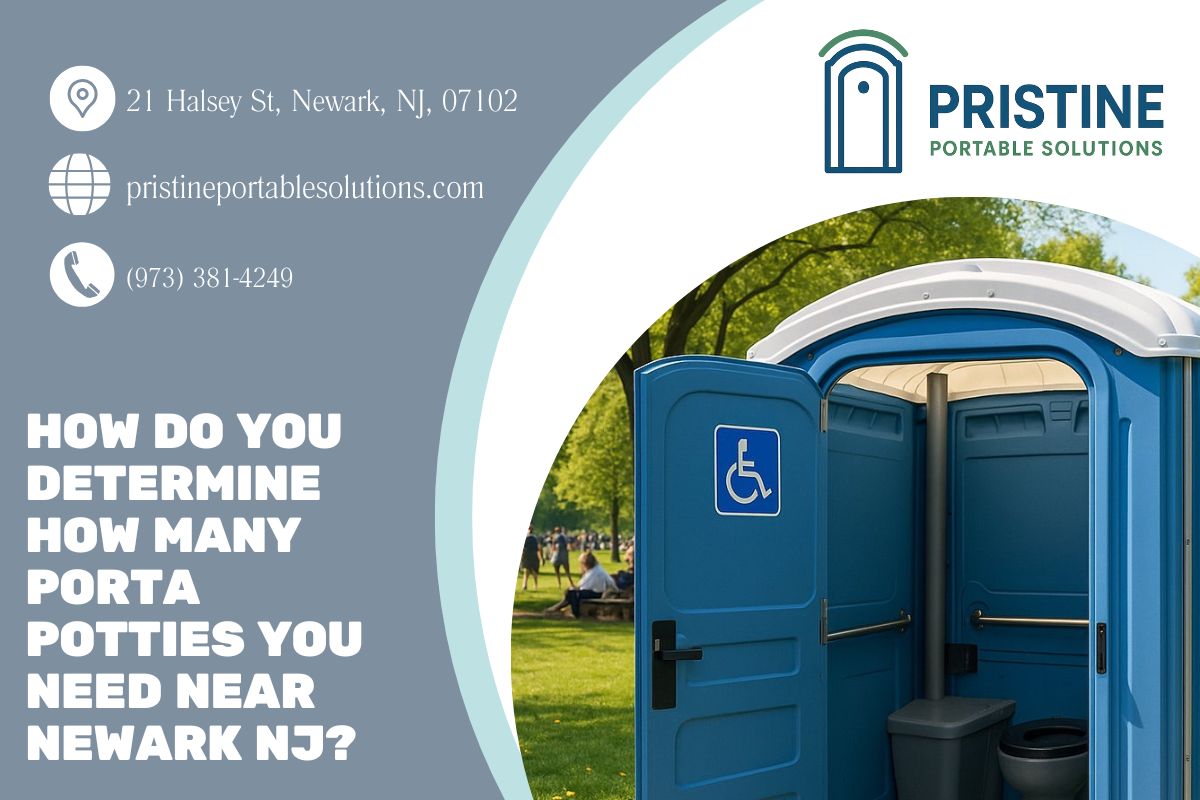
Yes, you’ll find ADA-compliant porta potties available for backyard rental in Newark. These accessible units meet federal regulations and feature wheelchair ramps, interior grab bars, and spacious interiors to accommodate guests with mobility needs at your event.
You’re responsible for securing the unit properly on level ground. If it tips, you’ll need professional cleanup services and may face violations of the sanitation code. We’ll anchor units correctly during installation to prevent weather-related incidents.

© 2026 Pristine Portable Solutions. All Rights Reserved.