
You can place a porta potty on Newark streets, but you’ll need proper authorization initially. You must obtain a Street Occupancy Permit from the Department of Engineering and a Right-of-Way Permit from the Division of Traffic and Signals. Your placement must not obstruct fire hydrants, bus stops, or accessible spaces, and you must maintain ADA compliance and ensure adequate pedestrian clearances. Unauthorized placement results in fines starting at $500 and potential equipment impoundment. Understanding these requirements helps you avoid costly violations and operational disruptions.
When placing porta potties on Newark streets, you must obtain a Street Occupancy Permit from the city’s Department of Engineering before installation.
You’ll need to submit detailed site plans showing exact placement locations, dimensions, and traffic flow impact assessments. The permit application requires proof of insurance and adherence to ADA accessibility standards.
Newark’s regulations mandate minimum clearance distances from fire hydrants, building entrances, and crosswalks.
You’re required to maintain unobstructed pedestrian pathways of at least 48 inches width. The city enforces strict placement protocols during special events, construction projects, and emergencies.
Digital permit submissions typically expedite approval, with decisions within 5-7 business days.
You’ll face penalties for unauthorized street placement, including removal costs and fines.
Monitor permit expiration dates to guarantee continuous compliance throughout your rental period.
See also: Newark portable toilet rental service
Newark’s street placement regulations exist to protect public safety, maintain traffic flow, and preserve infrastructure integrity. You’ll find these rules prevent porta potties from obstructing emergency vehicle access, sidewalk passage, and sightlines at intersections.
They’re designed to minimize disruption to Newark’s urban infrastructure while ensuring ADA compliance for wheelchair users.
The regulations also address sanitation concerns. Improper placement can lead to environmental hazards, groundwater contamination, and interference with drainage systems. You’re required to position units away from storm drains and water sources to protect Newark’s water quality.
Additionally, these rules maintain the city’s aesthetic standards and property values. By following placement protocols, you contribute to Newark’s modernization efforts while efficiently and responsibly meeting practical sanitation needs.
The placement requirements outlined above directly support Newark’s broader public health and safety framework.
You’ll find these regulations prevent contamination of water systems through mandatory setback distances from storm drains and waterways. Proper placement also guarantees emergency vehicle access remains unobstructed—critical for initial responders maneuvering your streets.
Your unit must maintain appropriate service intervals to prevent overflow and odor issues that affect neighboring properties. The city requires stable, level positioning to avoid hazards of tipping and spillage during use or transport.
You’re responsible for maintaining ADA-compliant access where applicable to ensure equitable service delivery.
Newark’s enforcement mechanisms include inspection protocols and penalties for violations.
Street placement of portable sanitation units requires specific authorization through Newark’s Right-of-Way permit system before you position any unit on public roadways.
You’ll receive approval when your placement serves construction projects, special events, or emergencies that meet city criteria. The permit specifies exact placement coordinates, required clearances from intersections and fire hydrants, and duration limits.
You must maintain continuous accessibility for emergency vehicles and pedestrians, ensuring units don’t obstruct traffic flow or create sight-line hazards. Digital permitting systems now streamline your application process, reducing approval times from weeks to days.
You’re responsible for proper unit orientation, reflective markings for visibility, and compliance with ADA accessibility standards.
Pristine Portable Solutions manages these regulatory requirements, securing permits and maintaining compliant street installations throughout your project timeline.
Construction sites throughout Newark require portable sanitation facilities when five or more workers operate on-site for consecutive shifts exceeding four hours.
You’ll need to secure a street occupancy permit from Newark’s Department of Engineering if your porta-potty placement impacts the public right-of-way. The permit application requires your construction timeline, site plans, and proof of insurance.
Your portable restroom must maintain ADA compliance standards and position at least three feet from active traffic lanes.
You’re required to service units at least once a week, though high-traffic sites require more frequent maintenance. Utility work permits automatically authorize temporary sanitation placement within designated work zones.
Smart contractors use GPS-enabled units with real-time monitoring systems to ensure regulatory compliance and optimize service schedules.
Pristine Portable Solutions streamlines your permitting process and delivers compliant solutions.
Public events in Newark with 100 or more attendees require one portable restroom per 50 guests for the first four hours, increasing to one per 40 guests for events longer than four hours.
You’ll need to submit your sanitation plan alongside your special event permit application to Newark’s Department of Engineering at least 30 days before your festival.
Street placement requires specific approval and designates exact locations that don’t obstruct traffic flow or emergency access routes.
Your permit must include ADA-compliant units—typically one accessible restroom for every ten standard units.
Modern tracking systems and innovative sanitation technology can help you meet compliance requirements while optimizing placement efficiency.
Newark’s municipal code requires documented service schedules for multi-day events to ensure proper sanitation standards are maintained throughout the festival.
Before placing portable restrooms on Newark streets, you’ll need to secure a Right-of-Way Permit from the Department of Engineering’s Division of Traffic and Signals. This permit guarantees your placement complies with pedestrian access requirements and traffic flow standards.
You’ll submit detailed site plans showing exact coordinates, accessibility clearances, and duration of placement. The application requires proof of liability insurance and written consent from adjacent property owners. Processing typically takes 5-7 business days.
Street permits differ from special event permits—they’re designed for construction projects, extended roadwork, or temporary commercial needs. You’ll pay fees based on placement duration and location zone.
Non-compliance results in immediate removal and citations. We’ll handle all permit documentation for your Newark project.
Newark’s Right-of-Way Permit serves as your legal authorization to occupy public street space with portable restrooms.
You’ll need to submit detailed site plans showing exact placement locations, dimensions, and proximity to intersections, fire hydrants, and pedestrian walkways. The permit application requires proof of liability insurance with minimum coverage of $1 million per occurrence.
You’re responsible for maintaining unobstructed pedestrian access and ensuring ADA compliance throughout the rental period. Processing typically takes 5-10 business days, though expedited review is available for emergencies.
Permit fees vary by duration and street classification—arterial roads incur higher costs than residential streets. You must display your permit number visibly on each unit.
Violations result in immediate removal and fines starting at $500.
When renting portable restrooms for events or construction sites in Newark, you’ll typically be responsible for obtaining all required permits unless your rental agreement explicitly states otherwise.
You must initiate the application process well in advance, as permit processing can take several weeks. Submit complete documentation to Newark’s Department of Engineering, including site plans, event details, and proof of insurance.
You’re accountable for ensuring compliance with all placement regulations and maintaining permits throughout the rental period. If you’re working with contractors, clarify permit responsibilities in writing before installation.
Some rental companies offer permit acquisition services for an extra fee, streamlining the approval process and ensuring regulatory adherence. However, final compliance responsibility remains yours.
Street placement of portable restrooms is subject to strict restrictions in several clearly defined areas throughout Newark. You’ll encounter firm prohibitions when attempting placement near protected zones, critical infrastructure, or areas designated for public safety. Understanding these limitations helps you plan effectively and avoid costly violations.
| Prohibited Location | Restriction Reason |
|---|---|
| Fire hydrant zones (15-foot radius) | Emergency access requirements |
| Designated bus stops and loading areas | Transit operations interference |
| Marked handicap parking spaces | ADA compliance violations |
| Historic district streetscapes | Preservation ordinances |
| Active construction safety zones | Contractor liability conflicts |
You’re required to identify alternative placement sites when these conditions exist. Pristine Portable Solutions evaluates your project location against Newark’s regulatory framework to ensure compliant positioning that maintains operational efficiency while respecting municipal restrictions.
Without obtaining proper municipal authorization, placing portable restrooms on residential streets in Newark constitutes a direct violation of city ordinances.
You’ll face enforcement actions, including immediate removal orders, daily fines, and potential legal proceedings. The city’s regulatory framework specifically protects residential zones from unauthorized street obstructions that impact traffic flow, pedestrian safety, and neighborhood aesthetics.
You must submit permit applications to Newark’s Department of Engineering before any residential street placement.
The approval process evaluates site-specific factors: sidewalk clearance requirements, drainage considerations, proximity to intersections, and neighbor notifications.
Thoughtful planning means you’ll engage with the permitting system early, providing detailed placement diagrams and project timelines.
At Pristine Portable Solutions, we navigate Newark’s regulatory landscape efficiently, ensuring your project remains fully compliant while seamlessly meeting your sanitation needs.
Because Newark’s traffic codes establish strict clearance standards, your porta potty placement must maintain minimum distances from roadways, sidewalks, and building entrances.
You’ll need to verify that your unit doesn’t impede pedestrian flow, emergency vehicle access, or vehicular sight lines at intersections. Newark’s municipal code requires unobstructed pathways to ensure ADA compliance and public safety.
Critical clearance scenarios to avoid:
We’ll guarantee your placement meets all regulatory requirements while optimizing accessibility.
Beyond local placement requirements, you must comply with both Newark municipal ordinances and New Jersey state statutes governing portable sanitation facilities.
Newark’s Department of Engineering requires permits for street-placed units to ensure they don’t compromise pedestrian flow or vehicle access. You’ll need to verify compliance with ADA standards, which require accessible units at public events and construction sites.
New Jersey’s Department of Environmental Protection enforces waste-disposal protocols; your rental provider must maintain proper pumping schedules and comply with sewage-handling regulations.
Furthermore, the state’s Right-to-Know Hazardous Substance Fact Sheets apply to chemical treatments used in units.
Pristine Portable Solutions stays current with these evolving regulations, managing permit applications and compliance documentation so you can focus on your project without regulatory concerns.
When placing porta potties on Newark’s public right-of-way—including sidewalks, streets, and public plazas—you must obtain an obstruction permit from the Department of Engineering’s Division of Traffic and Signals before installation.
This permit guarantees your temporary sanitation facilities won’t impede pedestrian flow, emergency vehicle access, or violate ADA compliance standards.
Key requirements include:
Pristine Portable Solutions handles permit coordination, guaranteeing your project meets Newark’s evolving infrastructure standards efficiently.
While Newark’s municipal codes govern local placement, New Jersey state regulations control how porta potties are transported, maintained, and serviced throughout the region. You’ll need to adhere to the New Jersey Department of Transportation (NJDOT) requirements for commercial vehicle operations and the Department of Environmental Protection (NJDEP) standards for waste handling.
| Regulatory Body | Key Requirements |
|---|---|
| NJDOT | Commercial driver licensing, vehicle weight restrictions, road permits |
| NJDEP | Commercial driver licensing, vehicle weight restrictions, and road permits |
Your service provider must maintain appropriate insurance coverage and comply with state-mandated sanitation protocols. These regulations guarantee safe transportation on state highways and proper waste treatment at approved facilities. When you’re selecting a rental company, verify they’re fully licensed under New Jersey’s commercial sanitation standards to avoid compliance issues.
Before installing a porta potty in Newark, you must guarantee the placement location meets specific safety and accessibility standards mandated by both municipal and OSHA regulations.
Your unit requires sufficient clearance from traffic, adequate ventilation, and stable ground conditions to prevent tipping hazards.
Critical placement specifications include:
You’ll need to maintain these standards throughout your rental period and ensure compliance with ADA accessibility guidelines when serving at public events.
| Location Type | Minimum Distance |
|---|---|
| Active traffic lanes | 10 feet |
| Controlled intersections | 25 feet |
| Fire hydrants | 15 feet |
| Bus stops | 20 feet |
These measurements prevent visual obstructions for drivers and maintain emergency vehicle access. You’re responsible for obtaining the required permits when placing units in public rights-of-way. Pristine Portable Solutions can help you navigate these requirements efficiently, ensuring your rental meets all municipal standards while maximizing site functionality and accessibility.
When placing porta potties near roadways or construction zones, you must implement proper visibility measures to protect both pedestrians and motorists. Newark’s street placement regulations require specific safety protocols that improve awareness and prevent accidents.
These measures aren’t merely suggestions—they’re crucial compliance requirements that protect your project from liability.
Required visibility and safety equipment includes:
Pristine Portable Solutions provides compliant safety equipment packages with every street placement rental.
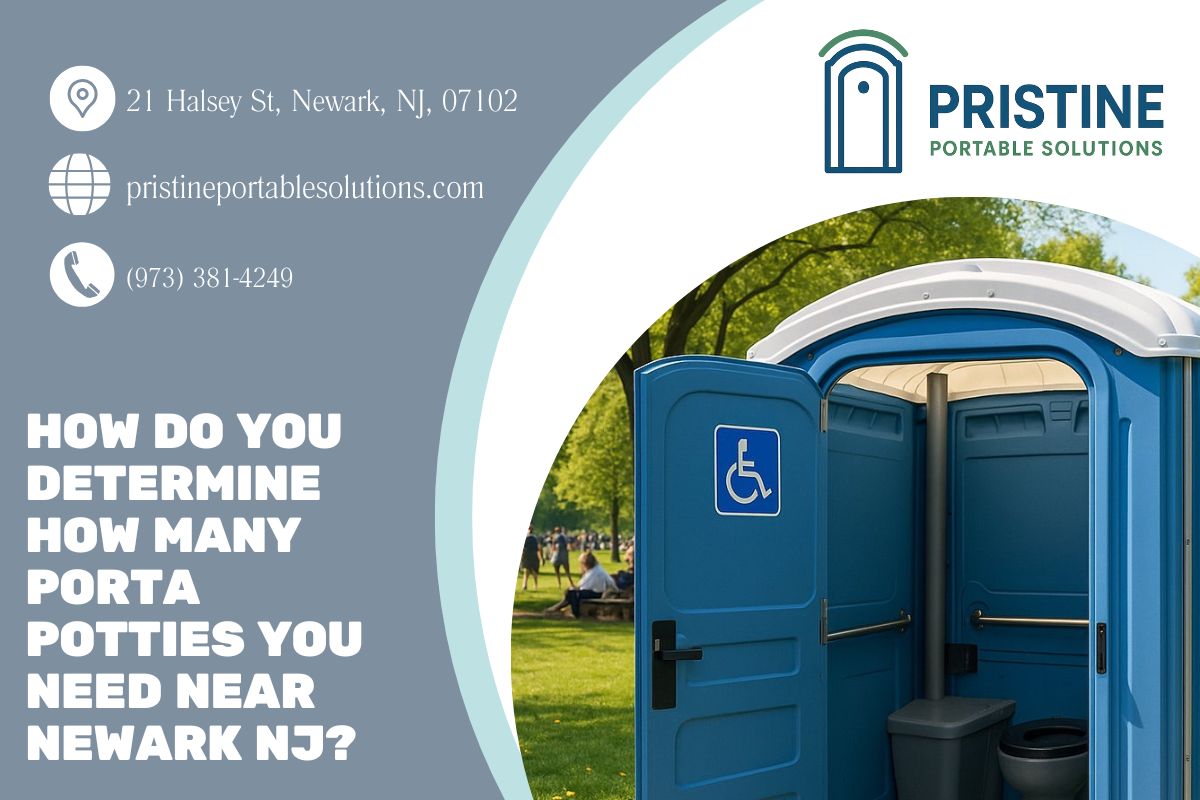
Under the Americans with Disabilities Act, you must provide accessible porta potty facilities when serving the public or operating workplaces with 15 or more employees. Newark enforces strict compliance standards for ADA-compliant units on street placements.
| Requirement | Specification |
|---|---|
| Interior Space | Minimum 60″ turning radius for wheelchair maneuverability |
| Door Width | 32″ clear opening with outward-swinging design |
| Grab Bars | Installed at 33-36″ height on both sidewalls |
| Ramp Access | Maximum 1:12 slope with handrails and non-slip surface |
You’ll need one ADA unit per cluster of standard porta potties. Pristine Portable Solutions delivers compliant units meeting federal and local accessibility requirements. Position these units on level ground with unobstructed pathways measuring at least 36″ wide from the sidewalk.
Meeting ADA standards is only half the compliance picture—you must also comply with Newark’s specific regulations on where these units can be located on public streets.
Street placement requires calculated positioning that balances accessibility with traffic flow and pedestrian safety. You’ll need proper permits before installation, and your units must maintain clear pathways for emergency vehicles and foot traffic.
Newark’s placement requirements include:
Pristine Portable Solutions handles all placement logistics and permit coordination for compliant installations.
Because accessibility violations carry significant penalties, your porta potty installations must satisfy federal ADA standards alongside Newark’s municipal codes.
You’ll need to guarantee at least one ADA-compliant unit for every ten standard units, with a minimum interior dimension of 60″x60″, grab bars, and proper door clearance.
Position accessible units on firm, level surfaces with unobstructed approach paths at least 60 inches wide. Your placement must maintain a maximum slope of 1:12 for connecting routes and eliminate barriers like curbs or debris.
Modern ADA-compliant units incorporate hands-free technology and enhanced ventilation systems that meet current accessibility standards.
You’re required to display proper signage with the International Symbol of Accessibility.
Document your compliance measures—Newark officials will verify conformance during permit reviews and site inspections.
When you place porta potties on Newark streets without proper authorization, you’ll face immediate citations starting at $500 for initial violations, with penalties escalating to $2,000 for repeat offenses within twelve months.
Additional enforcement actions include:
Smart compliance protects your business operations.
Pristine Portable Solutions maintains detailed permit documentation and placement protocols, ensuring your rentals comply with Newark’s evolving regulatory standards and avoid costly penalties.
Newark’s Department of Public Works enforces porta potty violations through a tiered penalty structure that targets both placement infractions and maintenance failures.
You’ll face initial fines ranging from $250 to $500 for unauthorized street placement, with repeat violations escalating to $1,000 or more. The city employs digital tracking systems to monitor compliance and issue citations efficiently.
If you don’t respond to violation notices within 30 days, you’ll encounter supplementary administrative fees and potential equipment confiscation. Enforcement officers conduct routine inspections in high-traffic areas and construction zones.
Your rental company may also lose its operating permit for severe or chronic violations. Understanding these consequences helps you maintain compliance while implementing creative sanitation solutions that meet Newark’s evolving urban infrastructure standards.
Beyond monetary penalties, non-compliant porta potty units face immediate removal orders from Newark’s enforcement division.
You’ll receive a 24-hour notice to relocate units that block traffic flow, impede pedestrian access, or violate setback requirements. If you don’t comply, the city will contract with external haulers at your expense.
Typical removal scenarios include:
Pristine Portable Solutions maintains compliance protocols preventing these disruptions.
We’ll help you navigate permit requirements and guarantee proper placement from initial installation through project completion.
You’ll typically receive your Newark porta potty permit within 5-7 business days after submitting your complete application. However, we recommend applying at least two weeks before your event to allow time for processing and any additional requirements.
Yes, you can rent a porta potty for your private street party in Newark. Still, you’ll need to obtain a proper permit from the city initially and guarantee placement complies with local obstruction ordinances and safety regulations.
You’ll need to contact Newark’s Department of Engineering at (973) 733-4311 to report unauthorized street placements. They’ll verify permit compliance and coordinate removal. Alternatively, reach the Code Enforcement Division, which handles public right-of-way violations citywide.
Yes, we’ll handle your entire permit application process from start to finish. Our team manages all Newark municipal paperwork, coordinates with city departments, and guarantees you’re fully compliant—so you can focus on your project’s success.
We’ll promptly replace weather-damaged units at no extra cost to you, as our rental agreement covers environmental incidents. Our comprehensive insurance covers you, and we’ll coordinate with Newark authorities if street permits require documentation updates.

© 2026 Pristine Portable Solutions. All Rights Reserved.